

Call Us Now
Contacts:Kelly
Phone :
18115029397Skape :+86 18115029397
Whatsapp :+86 18115029397
Views: 0 Author: Site Editor Publish Time: 2026-02-03 Origin: Site


Choosing the right CO2 cylinder supplier is a strategic decision that directly affects product safety, regulatory compliance, brand reputation, and long-term profitability. For importers, brand owners, distributors, and industrial buyers, the difference between a reliable manufacturer and an unreliable supplier can mean the difference between stable growth and costly recalls.This guide provides a professional, step-by-step framework for evaluating CO2 cylinder suppliers, covering factory capabilities, quality systems, certifications, pricing structures, OEM services, and long-term cooperation models. It also highlights how experienced manufacturers such as Changzhou Fairdale Metal Tools Co., Ltd. support global B2B buyers with consistent quality, compliant production, and scalable supply.
Different supplier types exist in the market, and understanding their business models helps buyers make informed sourcing decisions. Each type of supplier offers different levels of control, transparency, technical capability, and risk exposure.
Before sending RFQs or requesting samples, buyers should clearly identify what type of supplier they are dealing with and whether that supplier matches their business objectives.
OEM manufacturers own and operate their own production facilities, machinery, tooling, and quality control systems. All critical processes such as forming, threading, heat treatment, surface finishing, and testing are performed in-house.
Trading companies do not manufacture products themselves. They purchase from multiple factories and resell to buyers, often acting as coordinators rather than producers.
Key Differences at a Glance
| Item | OEM Manufacturer | Trading Company |
|---|---|---|
| Own Factory | Yes | No |
| Process Control | Full | Limited |
| Customization Ability | High | Medium to Low |
| Price Transparency | High | Lower |
| Technical Support | Direct from engineers | Indirect |
Why OEM Manufacturers Are Preferred for B2B Buyers
Better traceability of materials and processes
More consistent quality between batches
Faster engineering response for custom projects
Easier implementation of corrective actions
Trading companies may still be useful for small trial orders or multi-product sourcing, but they generally offer less production transparency.
A reliable manufacturer should be able to demonstrate its production capability clearly and transparently.
Documents to Request
Business license
Factory address and registration
ISO 9001 certificate
Product test reports
Material certificates
Visual Evidence
Factory exterior photos
Production line videos
Workshop photos
Warehouse images
Operational Proof
Equipment list (forming machines, furnaces, CNC lathes)
Monthly production capacity
Number of production workers
Verification Methods
Live video factory tour
Third-party audit (SGS, TUV, BV)
Sample production under buyer supervision
Tip: Real factories can explain their process flow in detail. Traders often avoid technical questions.
Brand Manufacturers
Brand manufacturers produce CO2 cylinders under their own brand names while also supporting OEM and private label projects. Unlike purely contract-based factories, brand manufacturers usually have their own product positioning, market strategy, and long-term development roadmap.
They typically invest more heavily in product design to ensure their cylinders meet evolving market trends and application requirements. Dedicated engineering teams continuously optimize structure, materials, and surface treatments, while long-term testing programs validate durability, pressure stability, and corrosion resistance. In addition, brand manufacturers actively collect market feedback from distributors and end users to refine product performance and packaging.
Working with brand manufacturers offers several important advantages. Their products are usually based on mature designs that have been proven in multiple markets. They also demonstrate a deeper understanding of end-user requirements, including compatibility, safety expectations, and regulatory compliance. Because brand reputation is directly tied to product quality, these suppliers often maintain stronger internal quality standards and more rigorous inspection procedures. Furthermore, brand manufacturers tend to provide marketing-oriented packaging support, helping buyers create retail-ready products that enhance shelf appeal and brand value.
This type of supplier is often suitable for buyers who are building premium product lines or positioning their brand in mid-to-high-end market segments.
CO2 cylinders are mainly produced in several global regions, each with unique characteristics. Understanding these regional differences helps buyers balance cost, quality, and compliance.
China
China is the world’s largest CO2 cylinder manufacturing base, offering large-scale production and strong OEM capability. Competitive costs and extensive export experience make Chinese suppliers popular for both standard and customized products.
Europe
European manufacturers are known for high automation levels and strict regulatory compliance. Products typically meet rigorous standards, but higher production costs usually result in higher pricing.
Southeast Asia
Southeast Asia is a growing manufacturing region with improving production capacity and quality systems. Pricing is generally moderate, with steadily increasing export capability.
Comparison Table
| Region | Cost Level | Customization | Certification Experience |
|---|---|---|---|
| China | Low–Medium | High | Strong |
| Europe | High | Medium | Very Strong |
| Southeast Asia | Medium | Medium | Developing |
Without proper evaluation, buyers may face several risks that directly affect product safety, delivery reliability, and brand reputation. These risks often remain hidden during early communication stages but become serious problems after mass production begins.
Common Risks
Inconsistent product quality, causing unstable performance between batches and potential recalls.
Fake or expired certificates, leading to legal and regulatory penalties.
Unstable production schedules, resulting in missed delivery deadlines.
Hidden subcontracting, causing loss of quality control.
Poor communication, slowing problem resolution.
Lack of after-sales responsibility, leaving buyers to handle defects and claims alone.
Risk Reduction Actions
Always request samples to verify product quality.
Verify certificates with issuing authorities or third-party databases.
Conduct factory audits, either in person or via inspection agencies.
Start with trial orders to evaluate consistency and delivery performance.
Use clear technical specifications, drawings, and agreed quality standards.
A structured evaluation process significantly reduces sourcing risks and builds the foundation for stable, long-term cooperation.
Manufacturing capability directly determines cylinder safety, consistency, and lifespan. Evaluating factory equipment, process expertise, and material control is crucial for ensuring high-quality products.
Certified Steel: Reliable factories use certified low-carbon steel or alloy steel.
Chemical Composition Control: Ensures uniformity in strength, ductility, and corrosion resistance.
Documentation: Material certificates should show tensile strength, yield strength, and elongation.
Proper steel selection reduces the risk of leaks, corrosion, and premature failure.
Multi-Stage Deep Drawing: Gradually shapes metal for uniform wall thickness.
Advanced Equipment: Ensures precise dimensions and minimal internal stress.
Material Structure Improvement: Enhances pressure tolerance and longevity.
Multi-stage forming improves grain structure, which contributes to better burst pressure performance.
Stress Minimization: Proper forming reduces concentration points that may fail under pressure.
Wall Thickness Consistency: Critical for safety and durability.
Deformation Resistance: Well-formed cylinders withstand handling and transport.
Uniform structure increases user safety and reduces risk of cylinder failure.
Heat treatment is applied after forming to relieve internal stress, improve toughness, and enhance ductility. This process prevents cracking, warping, or brittleness that can occur under pressurized conditions. Poor or uneven heat treatment compromises cylinder safety, increases defect rates, and may result in non-compliance with regulatory standards.
Threads must meet international valve standards to ensure proper sealing and prevent leaks. CNC machining guarantees high precision, repeatability, and surface finish quality. Accurate threading facilitates reliable valve assembly and prevents gas leakage during operation, ensuring both safety and customer satisfaction.

Surface finishing protects the cylinder from corrosion, mechanical wear, and aesthetic defects. Common methods include zinc plating, powder coating, and high-quality paint. Proper coating not only improves visual appeal but also extends cylinder life, reduces maintenance, and helps comply with environmental and export standards. Options include zinc plating, painting, or powder coating to improve corrosion resistance and appearance.
Proper finishing improves durability, reduces maintenance, and increases market appeal.
Surface finishing protects the cylinder from corrosion, mechanical wear, and aesthetic defects. Common methods include zinc plating, powder coating, and high-quality paint. Proper coating not only improves visual appeal but also extends cylinder life, reduces maintenance, and helps comply with environmental and export standards. Options include zinc plating, painting, or powder coating to improve corrosion resistance and appearance.
Manufacturing Process Comparison
| Process Stage | Basic Factory | Professional Factory |
|---|---|---|
| Steel Sourcing | Unknown origin | Certified steel mills |
| Forming | Single-stage | Multi-stage deep drawing |
| Threading | Manual | CNC machining |
| Heat Treatment | None / Basic | Controlled furnace |
| Coating | Thin paint | Uniform protective coating |
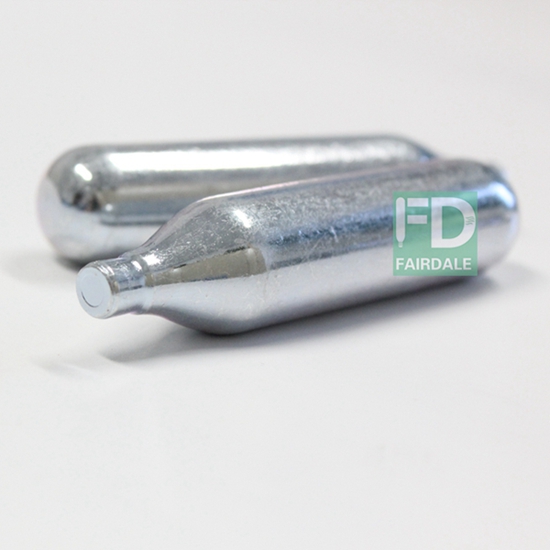
A reliable supplier implements quality control at every stage of production to ensure cylinders meet safety, durability, and performance standards. Comprehensive QC reduces defects, enhances customer confidence, and ensures regulatory compliance.
Steel Verification: Chemical composition and mechanical properties are checked.
Valve Inspection: Ensures compatibility and leak-free performance.
Packaging Check: Materials are examined to prevent damage during transport.
Documentation: Material certificates and test reports are recorded.
Proper incoming inspection prevents defective materials from entering production and reduces downstream risks.
Dimensional Measurement: Wall thickness, diameter, and length are continuously checked.
Weight Control: Ensures consistency for gas volume and pressure requirements.
Operator Checks: Skilled personnel monitor forming and assembly processes.
Real-Time Corrections: Deviations are immediately addressed to maintain uniform quality.
In-process QC ensures consistent cylinder performance and minimizes batch variability.
Gas Tightness Testing: Each cylinder is checked for leaks before proceeding to finishing.
Inspection Techniques: Includes visual observation, pressure monitoring, and specialized detection equipment.
Documentation: Test results are logged for traceability and regulatory compliance.
Water Bath Testing: Cylinders are submerged, and escaping air bubbles reveal micro-leaks.
Air Pressure Testing: Pressurizes the cylinder to detect any loss of pressure indicating leaks.
Combined Approach: Using both methods ensures a comprehensive seal verification.
Over-Pressurization Test: Cylinders are filled with water and pressurized above working pressure.
Structural Verification: Confirms wall integrity and identifies weak points.
Safety Documentation: Test results are maintained for each batch.
Hydrostatic testing ensures each cylinder can safely handle operational pressures and reduces
the risk of in-field failures.
Random Sampling: Selected cylinders are pressurized until failure to determine maximum strength.
Safety Margin Confirmation: Validates manufacturing processes and material selection.
Continuous Improvement: Results inform process adjustments and quality enhancements.
Burst testing guarantees that cylinders maintain a safety margin well above normal operating
conditions, protecting both end-users and brands. Random samples are pressurized until failure to confirm safety margins.
Typical Test Standards
| Test Type | Purpose | Frequency |
|---|---|---|
| Leak Test | Sealing integrity | 100% |
| Hydrostatic Test | Structural strength | Sampling |
| Burst Test | Safety margin | Sampling |
| Dimension Check | Fit & compatibility | 100% |
Price should always be evaluated in conjunction with product quality, certifications, and supplier service level. Low price alone may indicate poor quality or hidden costs.
Steel Cost: High-quality, certified steel increases base cost.
Coating Type: Zinc plating, powder coating, or paint affects price.
Certification Level: ISO, DOT, TPED compliance may add cost.
Order Volume: Larger orders often reduce unit price.
Packaging Requirements: Custom packaging and retail-ready designs may increase cost.
Buyers should analyze total cost, including quality assurance and logistics, rather than focusing on unit price alone.
Standard Models: Factories often allow flexible minimum order quantities to accommodate testing and initial orders.
Customized Designs: Higher MOQ may be required for tooling, color, and branding.
Trial Orders: Starting with small batches helps verify quality and service before committing to large-scale orders.
Standard Models: Typically 15–30 days depending on order size.
Custom Orders: Usually 30–45 days or longer for new tooling and branding.
Rush Orders: Some factories can expedite production for urgent needs.
Large factories maintain multiple production lines to scale output during peak seasons.
Flexible scheduling allows mixing standard and customized models in the same production batch.
Adequate staffing and machinery ensure deadlines are met without compromising quality.
Suppliers should share realistic monthly output figures to help buyers plan inventory.
Understanding capacity limitations avoids over-ordering or delays.
Capacity transparency enables long-term partnership and supply chain reliability.
Accurate capacity planning allows distributors and industrial buyers to maintain steady stock levels and reduce risk of supply interruptions. Bulk cartons, retail boxes, blister packs, or custom branding.
Typical Commercial Terms
| Item | Range |
|---|---|
| MOQ | 10,000 – 50,000 pcs |
| Lead Time | 15–45 days |
| Payment Terms | T/T, L/C Frequently Asked Questions About CO2 Cylinder Suppliers |
ISO 9001 plus market-specific certifications such as DOT or TPED. These certifications demonstrate that the factory follows internationally recognized quality and safety management systems.
Request factory audit, production videos, and on-site inspection. Additional verification can include checking business licenses, material certificates, and previous export records.
Yes, most professional factories support branding. They can customize logos, colors, packaging, and other design elements to meet client requirements.
Yes, samples are normally provided. This allows buyers to inspect product quality, compatibility, and design before committing to large orders.
Bulk, retail box, blister, and custom packaging. Proper packaging ensures product safety during transport and enhances shelf appeal for retail markets.
Leak test, hydrostatic test, and dimensional inspection. Comprehensive testing guarantees cylinders meet safety standards and function reliably for end-users.
Selecting the right CO2 cylinder supplier requires systematic evaluation of manufacturing capability, quality systems, certifications, pricing transparency, and long-term cooperation potential. Working with experienced manufacturers such as Changzhou Fairdale Metal Tools Co., Ltd. helps B2B buyers build a stable, compliant, and profitable supply chain while reducing risk and ensuring consistent product quality.

